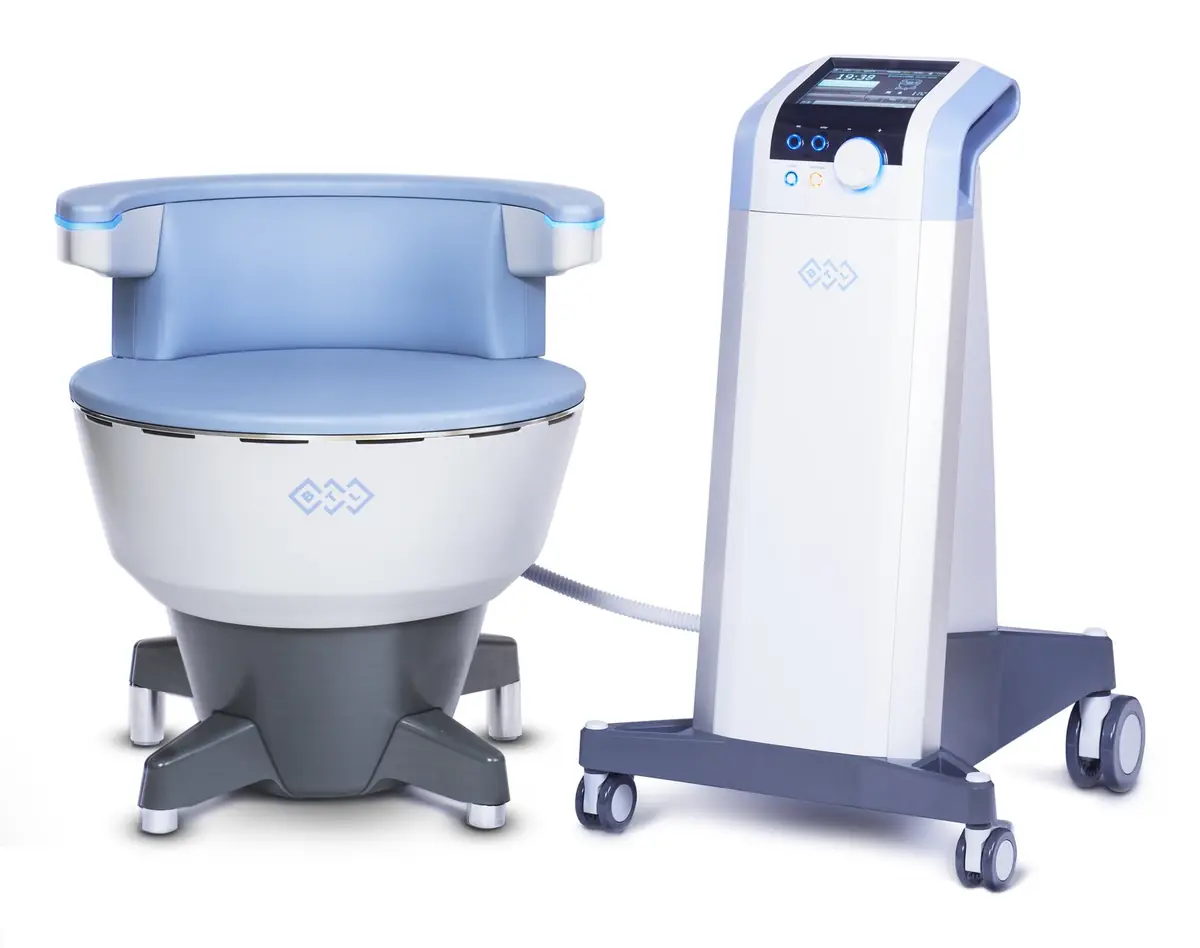
Your pelvic floor. Your decision.
After childbirth, with age or through intensive sport, the pelvic floor loses strength — often without anything being visible from the outside. Many women know the consequences: involuntary urine loss when laughing, sneezing or running, a feeling of pressure, reduced sensation. With the Emsella chair you train your pelvic floor muscles without having to do anything yourself.
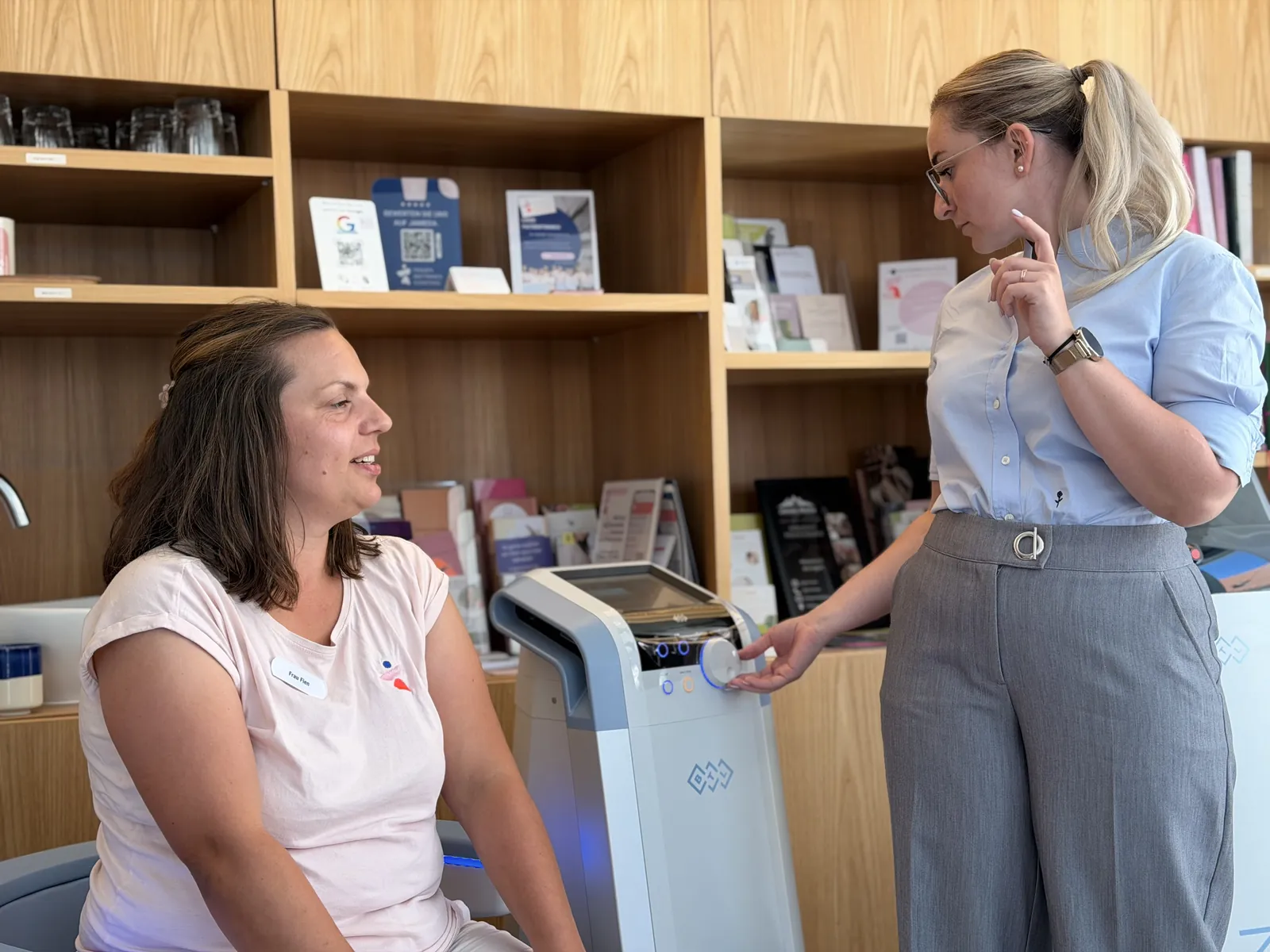

How the Emsella chair works
Briefly explained: the principle of electromagnetic pelvic floor stimulation.
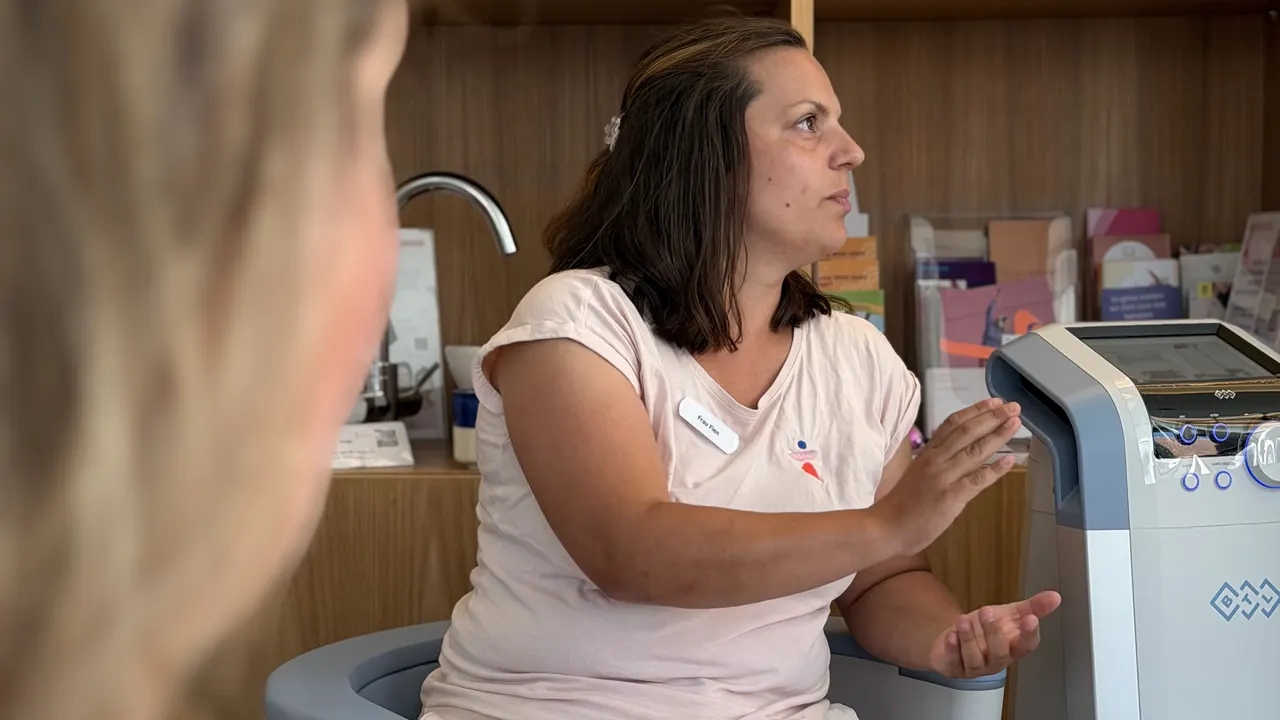
This is what it looks like.
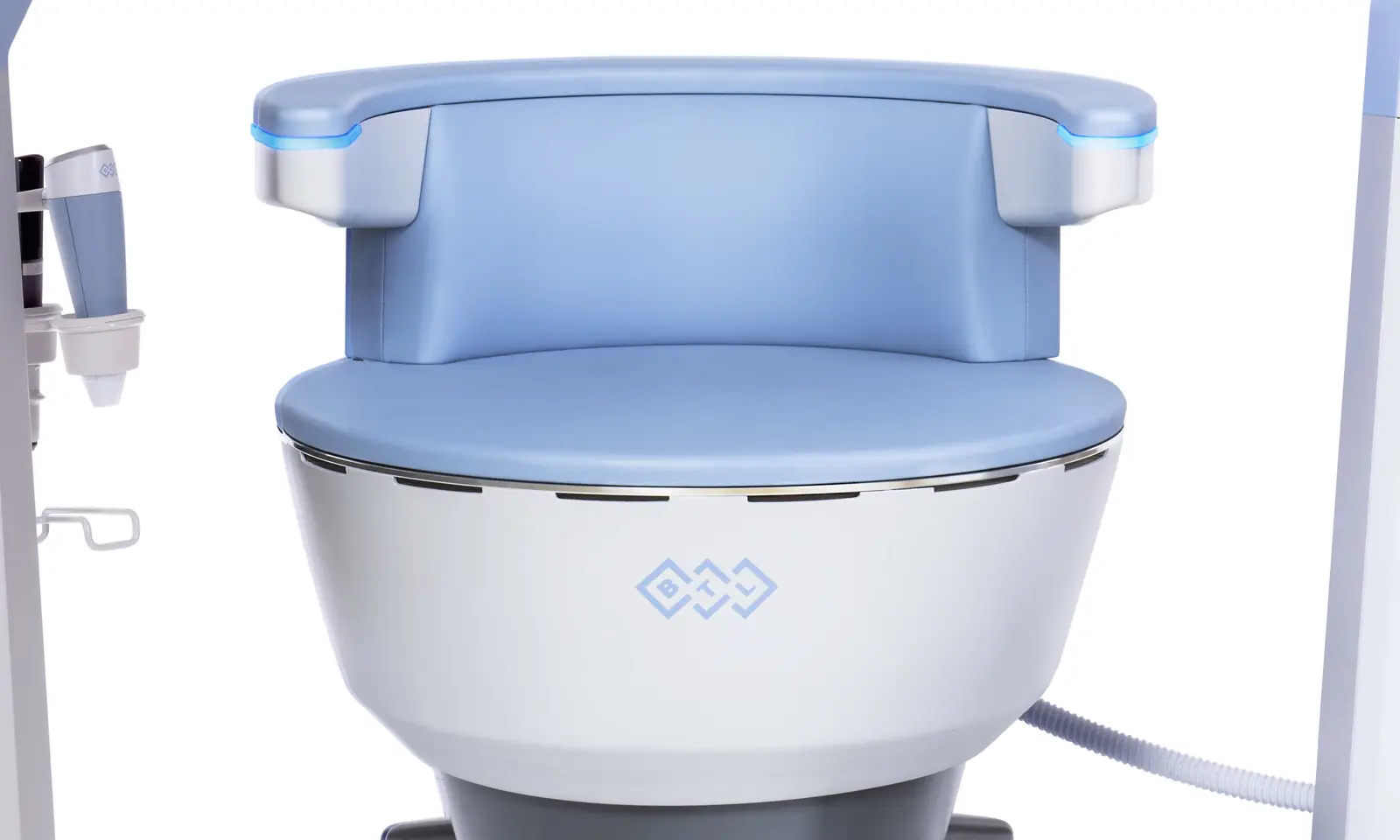
Image: BTL Medical Technologies
Your pelvic floor – explained in a diagram.
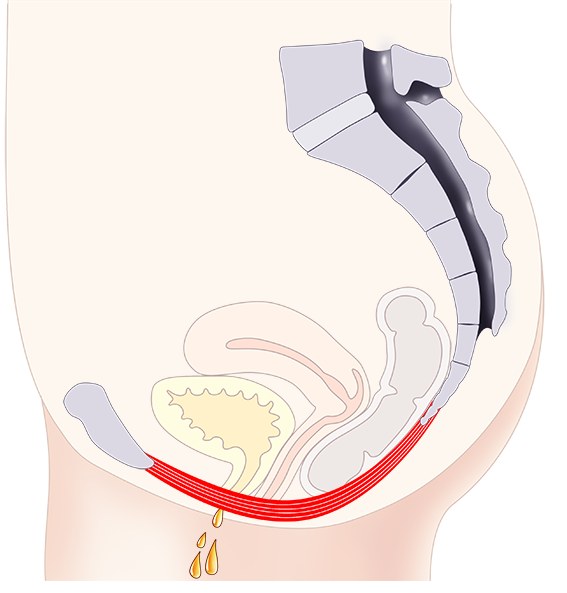
Graphic: BTL
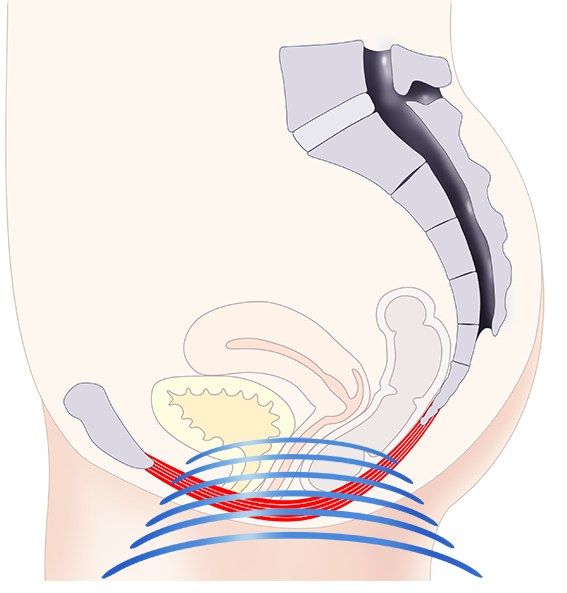
Graphic: BTL
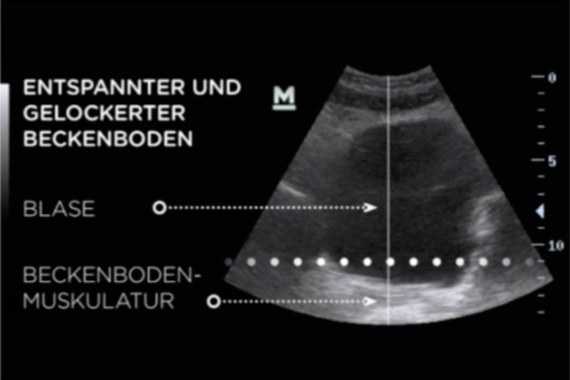
Source: BTL
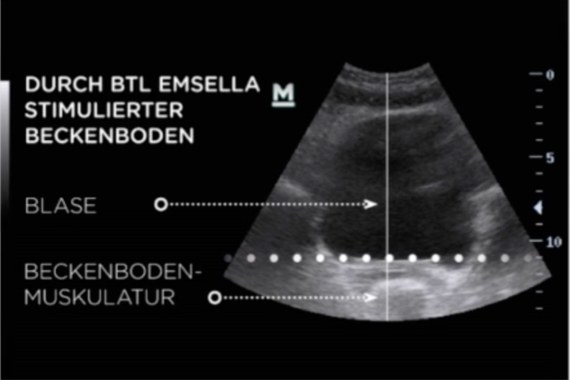
Source: BTL
Want to try it first?
Before you decide on a treatment, you can get to know the EMSELLA® chair for five minutes: fully clothed, no preparation, no obligation. As an introductory offer, the trial session costs €20 (until 30 March 2027).
Book a trial sessionHigh-intensity electromagnetic pulses trigger thousands of muscle contractions in a single session — fully clothed, without pain, without downtime.
One to two sessions per week for a stable result — afterwards you simply stand up and carry on with your day.
No changing, no anaesthetic, no recovery time. The method has been studied in clinical trials — we put the evidence in context further down.
Who is this for?
A good fit when symptoms remain after the postnatal recovery period — as the next step before more invasive options.
Also useful preventively: running and jumping put particular strain on the pelvic floor.
A weak core base can contribute to lower back problems — and the pelvic floor is part of that base.
In the consultation we check whether Emsella suits your symptoms — and we will tell you openly if another route makes more sense.
The pelvic floor is not a women’s matter only: the treatment is also used for bladder weakness, faecal incontinence and erectile dysfunction — and for lower back complaints. Partners are welcome.
Studies & effectiveness
The HIFEM technology behind the Emsella chair has been examined in clinical studies — with improvements in stress, urge and mixed incontinence as well as quality of life. A selection:
Safety and efficacy of HIFEM treatment for urinary incontinence, with a focus on quality of life.
Multicentre long-term study: sustained improvement in incontinence and sexual function over 12 months.
Emsella therapy compared with surgical colporrhaphy: faster recovery and a favourable safety profile alongside significant improvements.
Honestly: limits & requirements
Emsella is not a substitute for diagnosis. Before we treat, we establish where the symptoms come from — a prolapse, an infection or a neurological cause needs something other than muscle training.
With pronounced prolapse or severe stress incontinence, surgery may be the more effective choice — in which case we will tell you so.
And Emsella does not permanently replace your own training: muscle that is not used will weaken again. We therefore combine the treatment with guidance for training on your own.
Pacemaker, defibrillator, neurostimulator or medication pump · metal implants in the treatment area, including intimate piercings and artificial hip or knee joints · copper or gold IUD, copper chain, copper ball · pregnancy · active cancer · blood clotting disorders, decompensated heart disease, severe lung disease · fever · under 18. We do not start the series during menstruation — the first day afterwards is a good time to begin.
Frequently asked questions about Emsella
Does the treatment hurt?
No. You feel a tingling and a rhythmic tightening of the pelvic floor muscles. We set the intensity together so that it stays comfortable for you. Afterwards the pelvic floor can feel much as it does after exercise.
Do I have to undress?
No. You stay fully clothed and sit on the chair. Please remove metal items such as belts, keys and jewellery beforehand, and use the toilet before the session.
How many sessions do I need, and what does it cost?
The first appointment includes a short consultation, informed consent and the first session, and costs €150. Each further session costs €100 — €500 for the five follow-up sessions usually recommended. How many sessions make sense in your case is decided together in the consultation.
What do the studies say?
In a pilot study of 30 women (Berenholz and colleagues), 95 per cent of participants showed improved scores on the King’s Health Questionnaire after six sessions — a questionnaire measuring quality of life with incontinence. Twelve of the women used pads before treatment; nine of them needed fewer or none afterwards.
In context: this was a small pilot study without a control group, published in the device manufacturer’s own study collection. The 95 per cent refers to questionnaire scores on quality of life, not to a cure. Further publications are listed above under Studies. We cannot promise you a particular outcome.
How quickly will I notice something?
This varies from person to person. Some women notice a change during the series; for others the result only becomes apparent in the weeks after the final session.
How long does the effect last?
Like any muscle, the pelvic floor weakens again without training. In the pilot study mentioned above the improvements remained stable over six months of follow-up; what happens beyond that has not been studied. At the end of the series we discuss what makes sense for you — exercises at home, a course, or a refresher session.
Can I go straight back to work afterwards?
Yes. There is no downtime. You can carry on with your day immediately after the session.
Who is Emsella not suitable for?
We are not allowed to treat in cases of pregnancy, pacemaker, defibrillator, neurostimulator or medication pump, metal implants in the treatment area including intimate piercings and artificial hip or knee joints, copper or gold IUDs, copper chains or copper balls, active cancer, blood clotting disorders, decompensated heart disease, severe lung disease, fever, and under the age of 18. We do not start the series during menstruation.
Will my health insurance cover the cost?
German statutory health insurers do not currently reimburse Emsella. Private insurers and public-sector assistance schemes decide case by case where incontinence has been diagnosed. Please clarify this with your insurer before treatment begins.
I am not a patient of yours. Is that still possible?
Yes. Simply book the consultation appointment or give us a call.