Fibroids & bleeding.
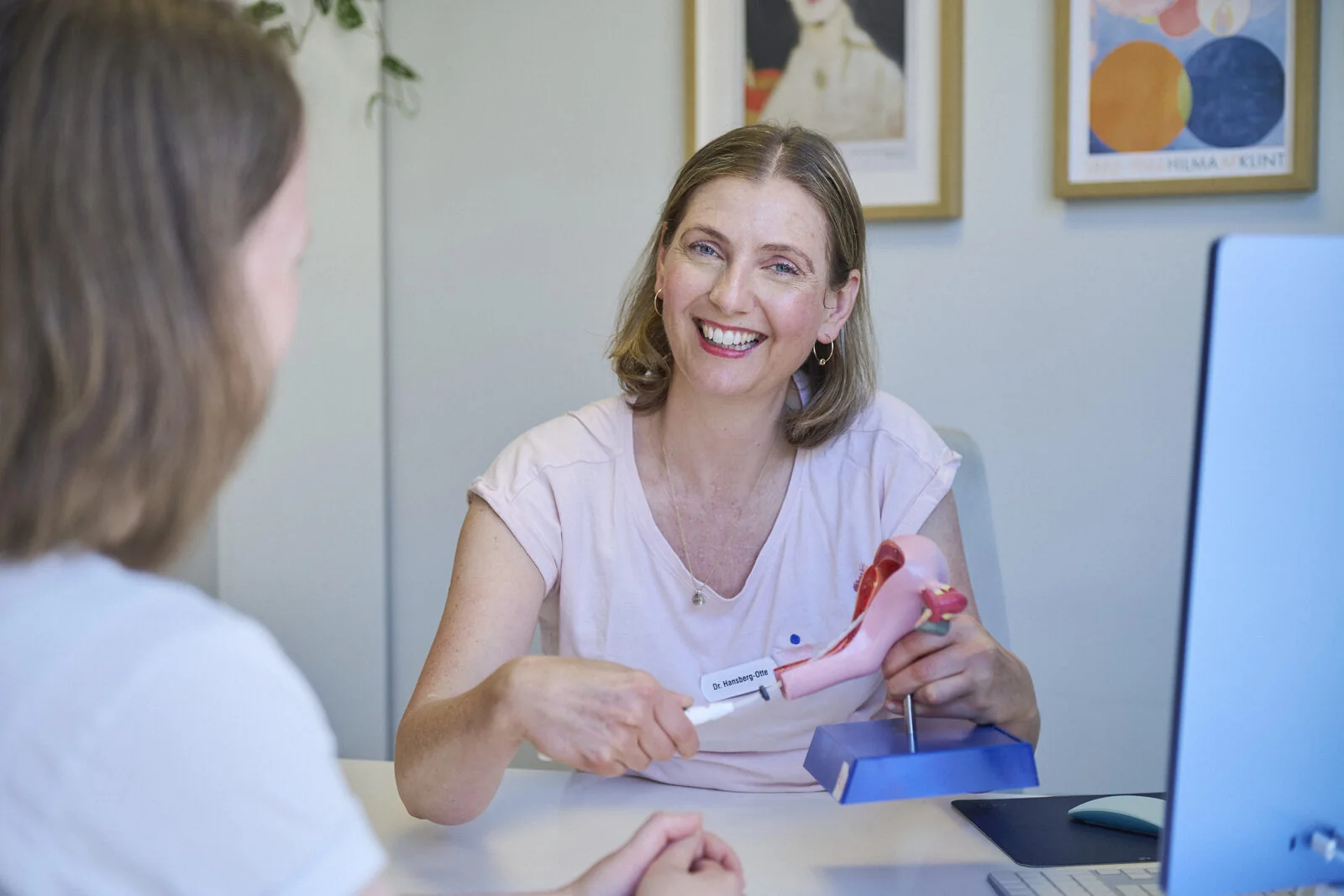
Bleeding that is too heavy, too long or too unpredictable drains energy from everyday life — and the causes are often very treatable: fibroids, polyps, hormonal imbalances. Using ultrasound and a careful history we clarify what's going on, and go through every path: from watchful waiting with a plan to medication, IUD and organ-preserving procedures.
My period is very heavy — when is it too much?
If it dictates your day, it's too much. We check fibroids, thyroid and your iron stores
Does my uterus have to be removed?
Almost never as a first step. There are medical and organ-preserving options — we'll show you all
Most fibroids never cause symptoms — we only treat what bothers you.
Source: Baird et al., Am J Obstet Gynecol 2003Fibroids are almost always benign. What matters is location, size and symptoms — not the finding alone.
Heavy bleeding often leads to iron deficiency and exhaustion. We measure it — fatigue is a symptom, not fate.
Heavy fibroid bleeding: a tablet instead of surgery


Who is this for?
- ·Very heavy or prolonged bleeding
- ·Intermenstrual bleeding
- ·Known fibroids with symptoms
- ·Pressure sensation in the lower abdomen
- ·Exhaustion or anaemia with heavy periods
How it works
History and vaginal ultrasound; blood count and iron status if needed.
All options on the table: monitoring, medication, hormonal IUD, organ-preserving procedures.
Results discussion and your plan — written down, clear, actionable.
Conditions as in our hormone consultation — all details there.
What you should know.
Does a fibroid have to be removed?
No. We treat symptoms, not findings. Many fibroids only need monitoring — and if something should be done, we check organ-preserving paths first.
What options are there besides surgery?
Medication, hormonal IUD, structured monitoring with fixed check-ups. Surgery is one option among several — not an automatism.
When is bleeding “too heavy”?
When you have to plan your life around it: changing protection more often than every two hours, changing at night, large clots, exhaustion. Then please get it checked.
Your question not here?Write to us — directly and securely via the online reception. On weekdays we usually reply the same day.
Ask your question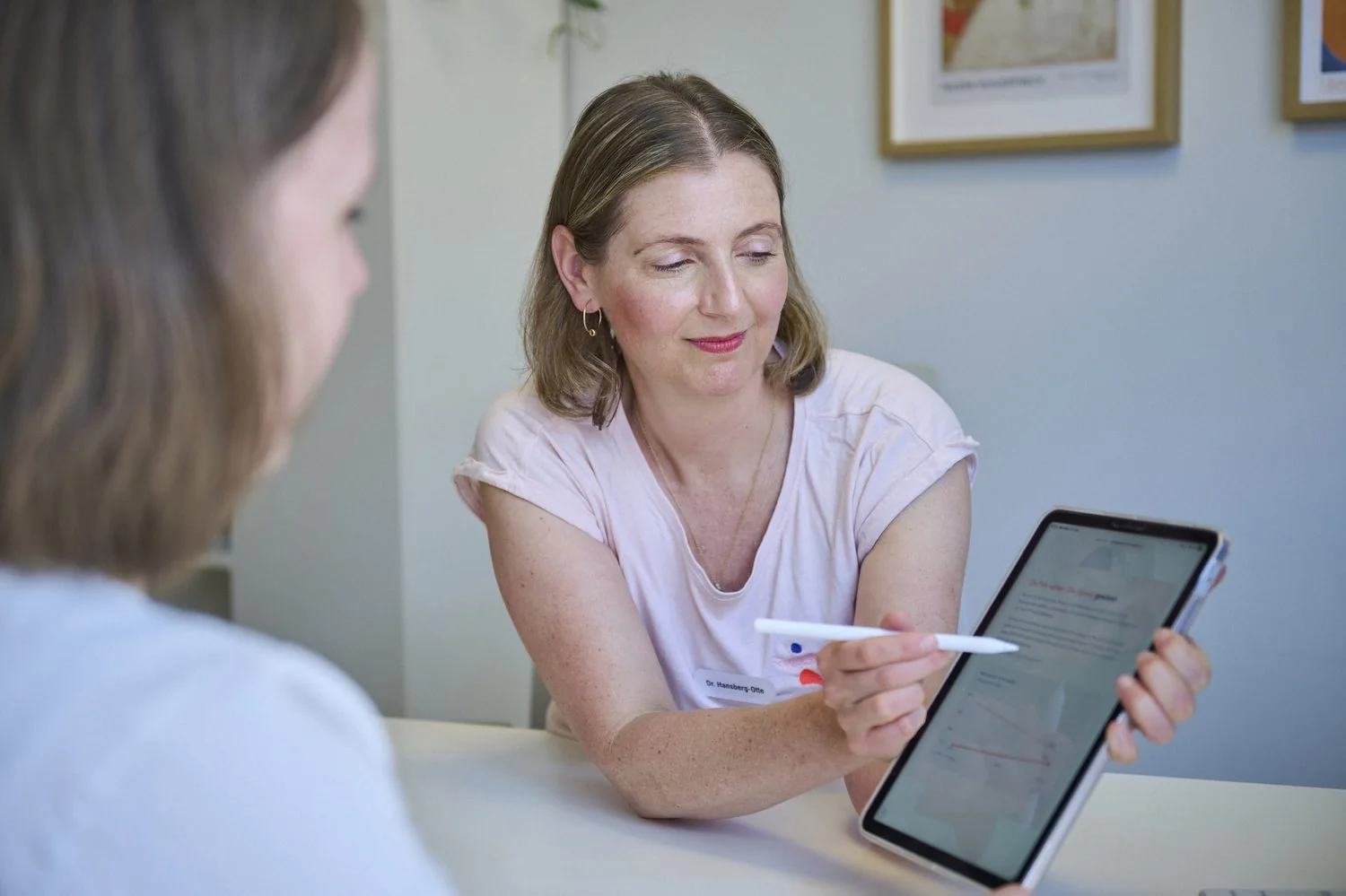
Fibroids & bleeding — Book an appointment.
Related topics
Ready for the next step?
Fill in the history form in advance, request an appointment, get to know the team.