Hormonal IUD
A locally acting progestin, lasting 3–8 years. Often lighter bleeding or none — very low systemic hormone load.
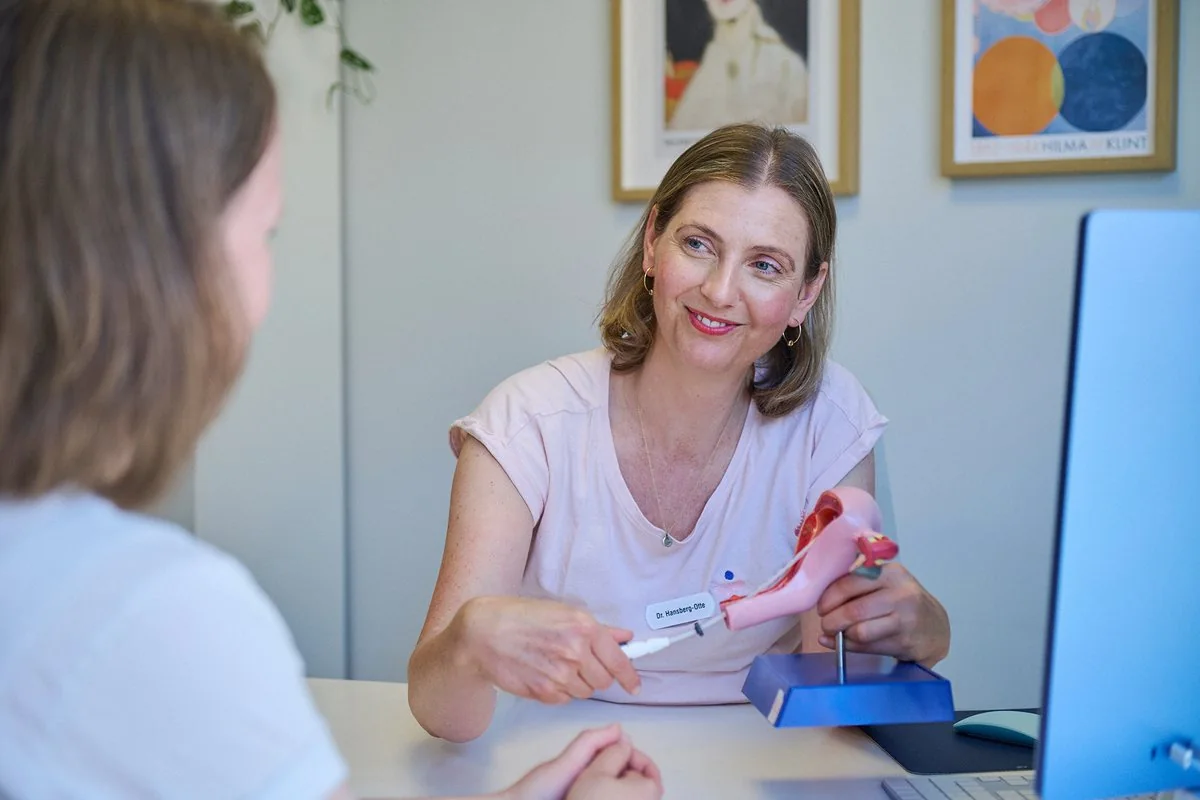
Hormonal IUD, copper IUD, the pill, condoms, hormone-free options. We listen first, then advise — and take the time to find what fits, together with you.
That’s how much IUD use among young women under 30 has risen since 2011 — from 3 to 18 percent.
Quelle: BZgA 2023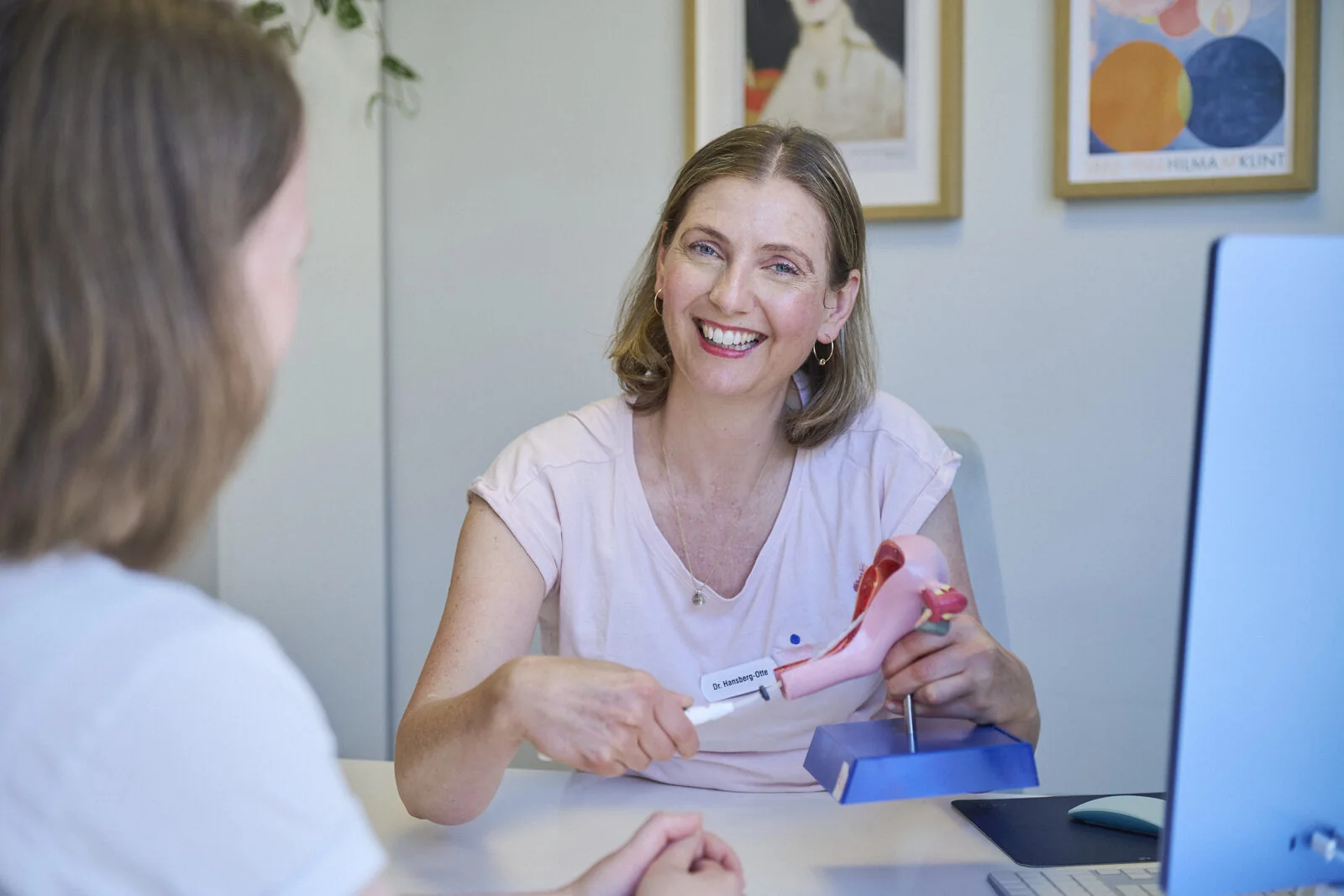
What does an IUD cost in total?
Copper approx. €285–292, hormonal IUD approx. €400 — including device, insertion, anaesthesia and both check-ups
Does insertion hurt?
We use local anaesthesia. Removal is far easier — usually just a brief pulling sensation
The lowest figure among reversible methods. Statistically, fewer than one in 1,000 women becomes pregnant unintentionally per year.
Quelle: pro familia / DGGGThat’s how many contracepting adults in Germany now use an IUD. The trend is rising — especially among younger women who are growing more cautious about hormones.
Quelle: BZgA 2023That’s how far pill use among young women has fallen since 2011 — from 72 to 46 percent. Tolerability matters more.
Quelle: BZgA 2023Tap a method — and you’ll see at a glance: how it works, its Pearl Index, how long it lasts and who it suits. This doesn’t replace a consultation, but gives you an overview before you come to us.

The Pearl Index shows how many of 100 women per year become pregnant unintentionally despite using the method. The lower, the safer. Important: there’s a difference between perfekter use (under ideal conditions) and typischer use (with human error). Below we show the typical figures — they’re the more realistic ones.
The IUD does particularly well because there’s no room for daily user error. Once it’s in place, it’s in place. That’s one of the main reasons it has become so much more popular in recent years.
Six questions about life stage, family planning, hormone tolerability and everyday life — and you’ll get a shortlist of methods that might suit you. No algorithm dictating to you, just a basis for our conversation.
Among women aged 18 to 29, pill use has fallen by 26 percentage points in twelve years — while IUD use in the same age group has risen from 3 to 18 percent.
The reason isn’t fashion but a changed attitude: 61 percent of respondents say hormonal contraception can have negative effects on body and mind (2018: 48 percent). Tolerability counts more than it used to. This is exactly where counselling practice is currently changing.
Source: BZgA contraceptive behaviour 2023We don’t prescribe off-the-shelf contraception. Instead of a quick recommendation, we offer a dedicated contraception consultation — and a follow-up appointment if something needs adjusting.
A locally acting progestin, lasting 3–8 years. Often lighter bleeding or none — very low systemic hormone load.
Completely hormone-free, lasting 5 years. Ideal if you deliberately want to avoid hormones. Bleeding can become heavier.
The classic hormonal methods — daily, monthly, weekly. We advise on the preparation, dose and form that suits you.
Diaphragm, symptothermal method, female condom, condom — we advise on these too. Used correctly, some methods are surprisingly reliable.
Your contraception isn’t an isolated topic. It connects with your hormone balance, your family planning, your screening. Here are the areas that link directly.
Tolerability, cycle complaints, menopause — when hormones play a bigger role.
Mehr →Fertility returns quickly. What you should know if you’re planning.
Mehr →The IUD is checked during screening — with us once a year anyway.
Mehr →Support from the start — screening, ultrasound, conversations, calm.
Mehr →In the knowledge section you’ll find the companion article with all the questions patients regularly ask us before and after insertion — pain, duration, fertility, alternatives.
Zum ArtikelOur contraception consultation takes its time. A first appointment is often enough to gain clarity — whichever direction you choose.
This page does not replace medical advice. Pearl Index figures are statistical approximations and can vary between individuals. Which method is right for you depends on many personal factors — we discuss these in our contraception consultation.